
A person sitting calmly with a hand resting on their chest, representing nervous system regulation therapy | clear mind utah

Nervous System Support

What Nervous System Regulation Therapy Actually Involves

Breathwork and cold water on your face can genuinely calm you down in the moment. But if your nervous system has been stuck in overdrive for months or years, a few deep breaths only go so far. Here's the difference between the self-directed tools and the professional support side of nervous system regulation — and how they actually work together.

Serving Utah County and Salt Lake County · American Fork, Utah

The basics

What Is Nervous System Regulation Therapy?

"Nervous system regulation" describes your body's ability to move smoothly between two states: the sympathetic "fight or flight" response and the parasympathetic "rest and digest" response, carried largely through the vagus nerve. According to the Cleveland Clinic, these two systems work like a gas pedal and a brake — one mobilizes you to respond to a perceived threat, the other calms things back down once it's passed. When that switching works well, stress passes through you instead of getting stuck. When it doesn't, people often describe feeling wired, exhausted, or both at once — unable to fully relax even when nothing urgent is happening.

"Nervous system regulation therapy" is the broader term for professional support aimed at that underlying pattern, rather than just the moment-to-moment symptoms. It's an umbrella that covers a range of approaches — somatic-focused talk therapy, breathwork coaching, and technology-assisted approaches like the microcurrent neurofeedback offered at Clear Mind Utah, described further below.

The key distinction: self-directed techniques work in the moment, on the state you're in right now. Regulation-focused support is aimed at the underlying pattern itself — how easily your system moves between states over time, not just how you feel in any single minute.

Two different tools

Self-Directed Tools vs. Professional Support

Neither one replaces the other — they're aimed at different timeframes.

Icons comparing in-the-moment self-directed techniques with ongoing professional support

What self-directed tools handle well

Calming a spike of stress in the moment Everyday resets — before a hard conversation, after a rough commute Free, private, no equipment needed Great as a daily habit alongside anything else

What professional support is aimed at

A pattern that's been running for months or years, not a single stressful week A system that feels stuck on high alert even when you're safe Support alongside talk therapy or other care, not instead of it Guided, personalized attention rather than a general technique

If you've read our page on nervous system dysregulation or our anxiety support page, this is the same territory from a different angle — less "what's happening" and more "what actually helps, and when."

Try this first

Start With the Self-Directed Version

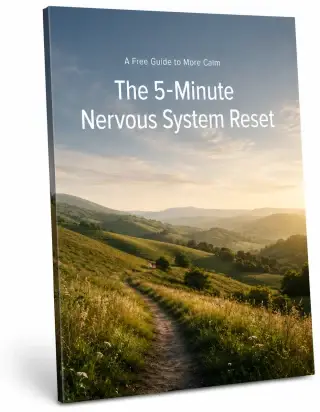
The 5-Minute Nervous System Reset

A free guide covering four fast, evidence-informed techniques you can use the moment stress hits — no equipment, no appointment. It's a genuinely good starting point before deciding whether you need more than the self-directed side of this.

Get the Free Guide

Most people who reach for that guide are handling normal, everyday stress — and the techniques in it are enough. The next section is for the smaller group whose baseline stays elevated even after doing all the "right" things.

Does this sound familiar?

Signs It Might Be Time for Professional Support

Self-directed tools handle a lot. Here's the pattern that usually means it's worth looking further:

In your daily pattern

Reaching for calming techniques multiple times a day just to function A baseline that never really drops, even on quiet days Feeling tired and wired at the same time, more often than not Trouble winding down even once the stressful thing has actually passed

Over time

Calm that never quite sticks once you stop actively working for it Needing more effort each time just to get the same relief Small stressors feeling disproportionately big A sense that something underneath hasn't really shifted

None of this means the self-directed tools failed. It usually just means the pattern underneath needs more than a technique can reach on its own.

Where this fits

How Neurofeedback Fits Into the Picture

This is where microcurrent neurofeedback comes in. At Clear Mind Utah, sessions use gentle microcurrent stimulation aimed at supporting your nervous system's own regulation patterns — offered as a wellness and nervous system support service, not a medical treatment. Neurofeedback approaches broadly are an active area of ongoing clinical research — a systematic review of the clinical evidence notes that while research continues to evolve, interest in these approaches for mood and anxiety-related support has grown substantially. Many clients describe it as complementary to whatever else they're already doing, whether that's talk therapy, medication managed by their doctor, or their own daily practice.

A free 30-minute consultation is the easiest way to find out whether this makes sense for your situation — no pressure, no referral needed, and no assumption that self-directed tools "failed" if they weren't enough on their own. Most nervous systems that have been running hot for a while need more than one lever.

See it for yourself

What Actually Happens in a Session

Sessions are gentle and non-invasive — no needles, no medication. A few small sensors are placed on the scalp while you relax in a chair for about 20 minutes. Many clients describe it as an easy, low-effort part of their week rather than something that requires special preparation or downtime afterward.

Individual experiences and results vary.

Common questions

Frequently Asked Questions

Is nervous system regulation therapy the same as talk therapy?
No — it's a broader umbrella term, and talk therapy is one piece that can fall under it. Approaches like microcurrent neurofeedback work alongside talk therapy rather than replacing it, and many clients are working with both a therapist and Clear Mind Utah at the same time.
How many sessions do people usually schedule?
It varies quite a bit from person to person, since everyone's starting point and goals are different. A free consultation is the best way to talk through what a reasonable session plan might look like for your specific situation.
Do I need to stop my breathwork or self-care routine if I start neurofeedback?
Not at all — keep it going. Self-directed techniques and neurofeedback sessions target different timeframes, so most clients get more out of doing both than choosing one over the other.
Is this a medical treatment?
No. Clear Mind Utah provides microcurrent neurofeedback as a wellness and nervous system support service. We don't diagnose, treat, or cure any medical or mental health condition — if you're managing a diagnosed condition, this is meant to sit alongside your existing care, not replace it.

Free 30-minute consultation

Ready to Talk Through Your Options?

Whether you're just starting to explore this or you've already tried everything self-directed, we're here to listen and help you figure out if neurofeedback makes sense as part of your support system.

No pressure. No referral needed. Flexible scheduling including evenings and Saturdays.

Clear Mind Utah  ·  21 E. 100 N., Ste. 101, American Fork, Utah  ·  (385) 304-4434

Individual experiences vary. This technique is offered as general self-care information and is not a substitute for medical or mental health treatment. Clear Mind Utah provides microcurrent neurofeedback as a wellness and nervous system support service. We do not diagnose, treat, or cure any medical or mental health condition. If you are experiencing a mental health crisis, please contact a qualified professional or call or text 988 to reach the Suicide and Crisis Lifeline.

Troy Gundersen, IASIS MCN Practitioner at Clear Mind Utah

About the Author

Troy Gundersen

Troy is the co-founder and owner of Clear Mind Utah, a family-owned microcurrent neurofeedback center in American Fork, Utah. He and his wife Valerie opened the center after experiencing firsthand how a stuck nervous system can quietly take over, and how much is possible when it finally shifts. Troy works alongside Val and their daughter Sydni to help adults and families across Utah County find their way back to calm. Learn more about the team →


IASIS MCN Practitioner American Fork, Utah Family-Owned Center
author avatar
Troy Gundersen

Featured Articles

FREE PDF GUIDE
The 5-Minute Nervous System Reset free guide cover

The 5-Minute Nervous System Reset

Four fast, evidence-informed techniques you can use the moment stress hits — no equipment, no appointment. Get it free, straight to your inbox.

Get the Free Guide →

No spam. Unsubscribe anytime.

BY TROY & VALERIE GUNDERSEN
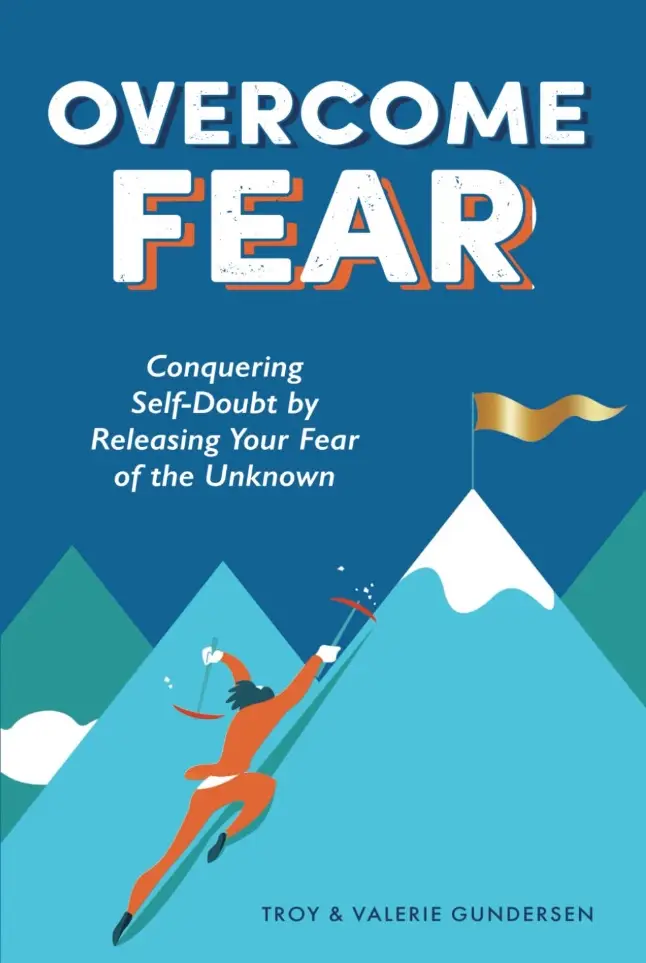
Overcome Fear book by Troy and Valerie Gundersen

Overcome Fear

Real tools for moving through self-doubt and the fear of the unknown — from the founders of Clear Mind Utah.

Get It on Amazon →
Find-Us-Here.com - the world's largest business and community directory covering Australia, Canada, New Zealand, United Kingdom and United States