Neurofeedback FAQs — American Fork, Utah County
Choosing a new approach to brain health comes with real questions. Below you'll find honest answers about how IASIS MCN works, what to expect during a session, and what many clients report experiencing — from our family-owned center right here in American Fork.
About IASIS MCN
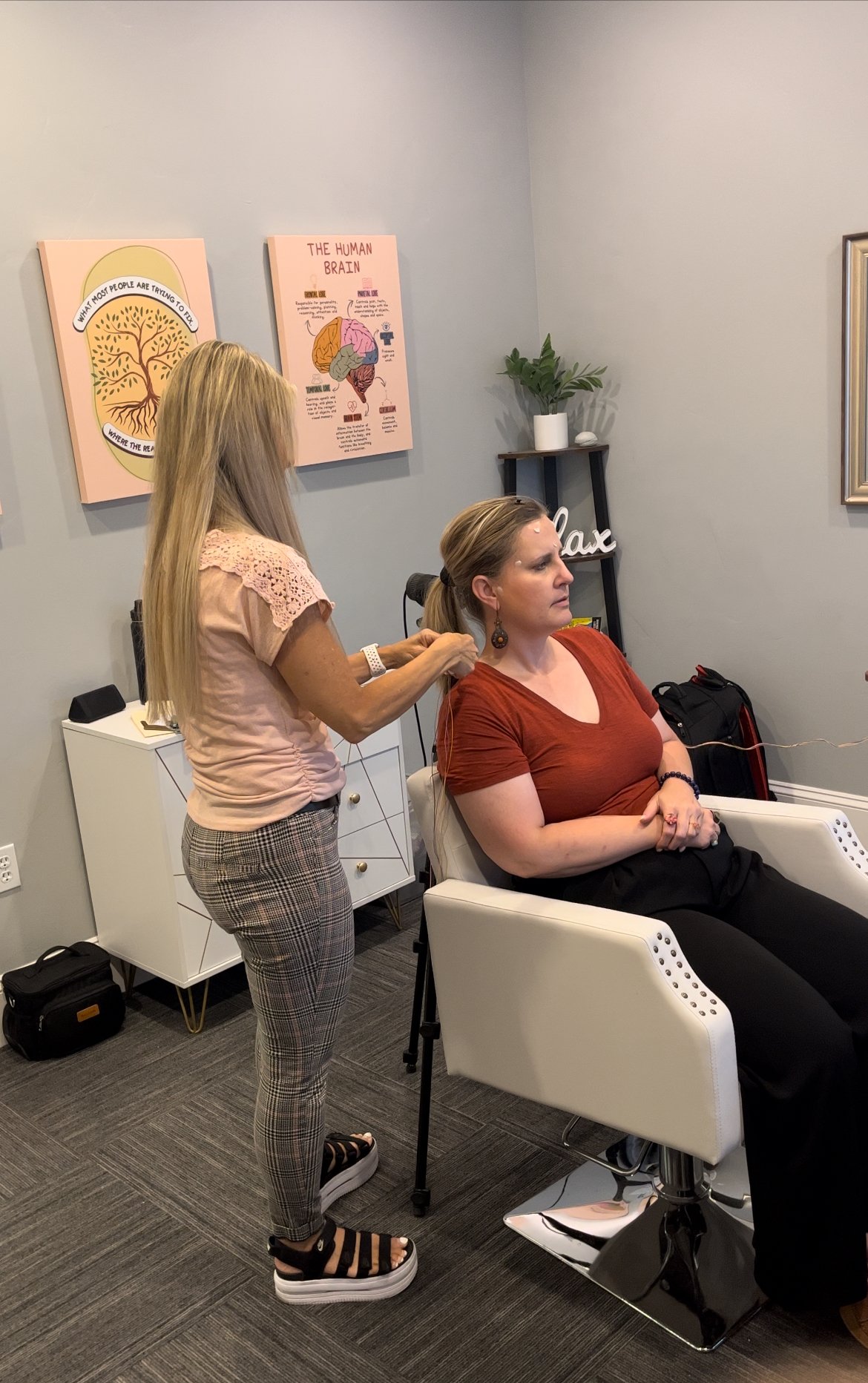
IASIS Microcurrent Neurofeedback (MCN) is a gentle, non-invasive approach designed to help your brain function at its best. Think of it like restarting a frozen computer — by delivering ultra-low-power electrical pulses, MCN helps interrupt faulty brainwave patterns caused by stress, trauma, toxins, or injury. The result is a brain that can regulate itself more effectively, which many clients report as improvements in mood, focus, sleep, and overall well-being.
Traditional neurofeedback requires you to actively watch your brainwave activity on a screen and mentally work to change it — a process that can take many sessions of conscious effort. IASIS MCN works passively. The microcurrent signal is so subtle you don't feel it, and no mental effort is required on your part. Most clients notice shifts far sooner, often within the first few sessions, because the brain responds directly to the feedback rather than having to learn to respond over time.
Neurofeedback itself has roots going back to the 1960s. One of its most compelling early stories involves Dr. Barry Sterman, a UCLA neuroscientist commissioned by NASA to study the effects of rocket fuel exposure on workers who were developing serious neurological symptoms — including seizures, nausea, and cognitive decline. Dr. Sterman discovered that neurofeedback training could significantly reduce those symptoms, helping to validate the field's potential. IASIS Technologies, the company behind the specific MCN system we use, was founded in 2010 and has since become one of the most widely used and clinically supported microcurrent neurofeedback systems in the world, with over 100,000 clients treated.
A brain map (or qEEG) is typically used when a provider needs to identify specific abnormal brainwave patterns and build a custom training protocol around them. Traditional neurofeedback depends on that process: measure, compare to a target, then train the client to consciously shift certain frequencies at specific sites. It requires a detailed map because the protocol is built from it.
IASIS MCN works differently. Rather than training you toward a predetermined brainwave target, it delivers brief, very-low-intensity microcurrent feedback that prompts your nervous system toward self-regulation on its own. No conscious effort required — your brain decides what to do with the feedback. Because we're not building a qEEG-guided conditioning protocol, a brain map simply isn't part of what we do.
A simple way to think about it: traditional neurofeedback with a brain map is like programming a precise GPS route. IASIS MCN is more like giving the nervous system a gentle nudge and trusting it to find its own way back to balance.
Sessions & Safety
Yes — IASIS MCN is exceptionally safe. The system uses an FDA-registered EEG amplifier, and the signals involved are roughly 1/300th of what a standard cell phone emits, lasting as little as 1/100th of a second. It is non-invasive, drug-free, and involves no radiation. Among the more than 100,000 people who have experienced MCN therapy, no adverse effects have been reported. It is considered safe for clients of all ages, including children.
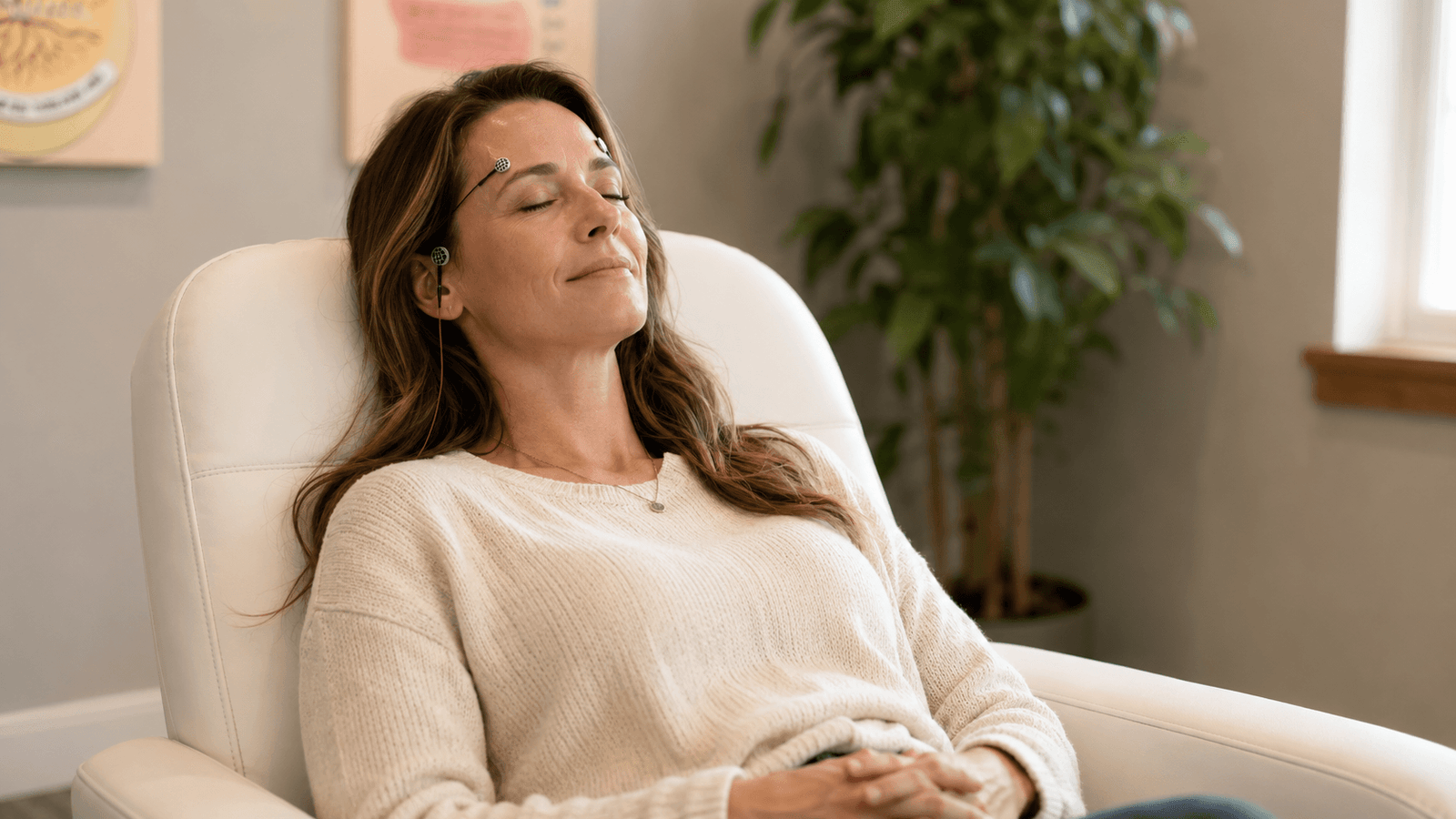
Your first session will last about an hour as we gather some initial information and get to know your situation. After that, sessions typically run around 30 minutes. We ask that you wear comfortable clothing and skip hair products like gels or sprays on session days — and avoid makeup on the forehead area — so we can get accurate sensor readings. Most people find sessions effortless and relaxing. There's nothing you need to concentrate on or do; just sit back and let the process work.
Most sessions take about 30 minutes. Your first visit will be closer to an hour as we complete an initial assessment and review your health history.
There are no known side effects from microcurrent neurofeedback. Occasionally, clients notice mild tiredness after a session — similar to how your muscles might feel after a good workout, except it's your brain that did the work. On rare occasions a brief "over-stim" response can occur, particularly if someone's nervous system is in a heightened state at the time of the session. If that happens, there is a simple 15-second protocol to resolve it, and it passes quickly. It is not dangerous.

Results & Effectiveness
Effectiveness varies from person to person, so we're cautious about attaching one number to it. What we can tell you is what we typically see: many clients notice meaningful shifts — in mood, focus, sleep, or overall calm — within their first few sessions, with changes tending to build across a full series. Our goal is to help each person reach what we call "lasting stability," a point where ongoing sessions are no longer needed and occasional tune-ups are enough to maintain progress. See how effectiveness typically unfolds, session by session →
Many clients notice initial shifts within one to three sessions. The total number of sessions depends on what you're addressing and its severity, but lasting improvements are commonly seen within around 20 sessions. Some people choose to schedule occasional tune-ups afterward, while many find that no further sessions are necessary at all.
The improvements from IASIS MCN tend to build and deepen with each session. By the end of a full series, many clients report substantial and lasting changes. This is because MCN helps the brain restore healthier neurochemical balance and strengthen its natural neuroplasticity — making it more resistant to returning to dysregulated patterns. Some clients never need to return; others enjoy an occasional tune-up to stay at their best.
It's a fair question — and the answer comes down to a common root cause. Many seemingly different conditions — anxiety, ADHD, sleep difficulties, depression, PTSD — share an underlying pattern of dysregulated brainwave activity. The brain gets stuck in faulty loops, and those loops express themselves differently depending on the person.
IASIS MCN works by gently interrupting those patterns and prompting the nervous system back toward healthier function. It also sensitizes the nervous system overall, which means the brain becomes more responsive — many clients find that their medications become more effective as a result, and some are able to reduce or discontinue them altogether in consultation with their doctor. When you address the root-level dysregulation, a wide range of downstream symptoms often improve along with it.

Practical Questions
No. IASIS MCN is not intended to replace your current medications, and we never advise stopping or changing anything without guidance from your prescribing physician.
What many clients notice over time is that as their nervous system becomes better regulated, their sensitivity to medication increases — meaning the same dose may become more effective. Some individuals, working closely with their doctor, find they are eventually able to reduce or discontinue certain medications. But that is always a conversation between you and your healthcare provider, and one we fully support you having.
Honestly — it's a fair question, and it surprises a lot of people to learn that neurofeedback has been around since the 1960s. The word itself doesn't exactly roll off the tongue, and awareness tends to travel person to person rather than through mainstream channels.
What we do know is that more and more families across Utah County are discovering it — often after years of trying other approaches — and finding it to be one of the most meaningful investments they've made in their brain health. If you found us, you're already ahead of the curve.
A Little Brain Science
Your brain produces five types of electrical waves — each linked to a different mental state. When these frequencies fall out of balance, many clients notice it in their mood, sleep, focus, and energy. IASIS MCN works by helping the brain find its way back to healthier patterns across all of them.
Delta
0.5 – 4 Hz · Deep Sleep & Healing
The slowest brainwaves, dominant during deep, restorative sleep. Delta is when your brain and body do their deepest repair work — hormone regulation, immune function, and cellular regeneration.
When Delta comes into balance
Many clients report sleeping more deeply, waking more refreshed, and noticing improvements in physical recovery and overall vitality.
Theta
4 – 8 Hz · Creativity & Memory
Present in the drowsy state between waking and sleep, and during deep meditation. Theta is the bridge to memory consolidation, creative insight, and emotional processing — but too much while awake can cause brain fog and inattention.
When Theta comes into balance
Clients often notice improvements in mental clarity, memory, and the ability to process emotions without feeling overwhelmed or spacey.
Alpha
8 – 13 Hz · Calm Focus & Flow
The "relaxed awareness" state — present when you're calm but alert. Alpha is the sweet spot between thinking and resting. It's associated with creativity, learning readiness, and a sense of ease. Anxiety and chronic stress often suppress alpha production.
When Alpha comes into balance
Many clients report feeling calmer, less reactive, more present, and better able to shift into a focused state without forcing it.
Beta
13 – 30 Hz · Active Thinking & Focus
The dominant waking state — active during thinking, problem-solving, and conversation. Healthy beta keeps you sharp and engaged. Too little leads to brain fog and inattention; too much, especially high beta, is closely associated with anxiety, racing thoughts, and hypervigilance.
When Beta comes into balance
Clients often notice steadier focus, reduced mental chatter, less anxiety, and a greater ability to stay on task without feeling overwhelmed or scattered.
Gamma
30 – 100 Hz · Peak Performance & Integration
The fastest brainwaves, associated with high-level cognitive processing, learning, and the brain's ability to bind information from different regions into a unified experience. Gamma is thought to play a key role in memory formation, sensory perception, and moments of insight.
When Gamma comes into balance
Many clients report sharper thinking, improved memory recall, heightened sensory awareness, and a greater sense of mental clarity and presence.
IASIS MCN doesn't target any single brainwave frequency in isolation. Instead, it gently prompts the nervous system as a whole to reorganize — allowing all five frequencies to find a healthier, more natural balance.
Free 30-Minute Consultation
Whether you're ready to book or just have a few questions — we're here. No pressure, no referral needed, and no expectation that you have it all figured out before you reach out.
You're not broken. Your nervous system may simply be doing its best to protect you. Clear Mind Utah helps support calmer days, better regulation, and a greater sense of resilience. Your nervous system deserves a chance.

No pressure. No referral needed. Flexible scheduling including evenings and Saturdays.