
A Simple Nervous System Reset
Somebody Told You to
“Just Breathe.”
Here’s the Part They Left Out.
Your nervous system runs on two pedals: gas and brake. Most of us have gotten really good at one of them. Here’s the five-second move that actually taps the other.
Serving Utah County and Salt Lake County · American Fork, Utah
The basics
Your Nervous System Has a Gas Pedal and a Brake Pedal
Somebody tells you to just breathe, and it’s not wrong, exactly. It’s just incomplete. Breathing in and breathing out do two completely different jobs in your body, and most advice skips right past that.
Think of it like a car. Gas is your sympathetic nervous system: fight or flight, heart rate up, breathing short and fast, muscles ready to act. Brake is your parasympathetic side: rest and digest, heart rate settling, muscles releasing. Both are necessary. The problem is most of us spend all day with a foot on the gas and genuinely don’t know where the brake pedal is.
Gas — fight or flight
Brake — rest and digest
Finding the brake pedal isn’t about forcing yourself calm. It’s a specific, physical signal you send your body — and it starts with your exhale.
The science, briefly
Why Breathing Out Longer Than You Breathe In Actually Works
Here’s the part that surprises people: your inhale and your exhale send your nervous system opposite signals. Breathing in nudges your heart rate up slightly. Breathing out brings it back down. This back-and-forth is called respiratory sinus arrhythmia, and it’s driven by your vagus nerve — the main line connecting your brain to your heart, lungs, and gut.
A 2018 review in Frontiers in Human Neuroscience found that slower breathing with longer exhalations directly stimulates the vagus nerve, the main channel for your parasympathetic (“rest and digest”) system. In plain terms: the exhale isn’t just part of the breath. It’s the part doing the actual work of telling your body it’s safe to stand down.
That’s the whole idea behind extending your exhale past your inhale. You’re not meditating your way to calm or willing yourself to relax. You’re sending a specific physical signal — the same way pressing a brake pedal is a specific physical action, not a feeling you talk yourself into.
Source: Gerritsen & Band, “Breath of Life: The Respiratory Vagal Stimulation Model of Contemplative Activity,” Frontiers in Human Neuroscience, 2018.
Try it right now
In for 4. Out for 8.
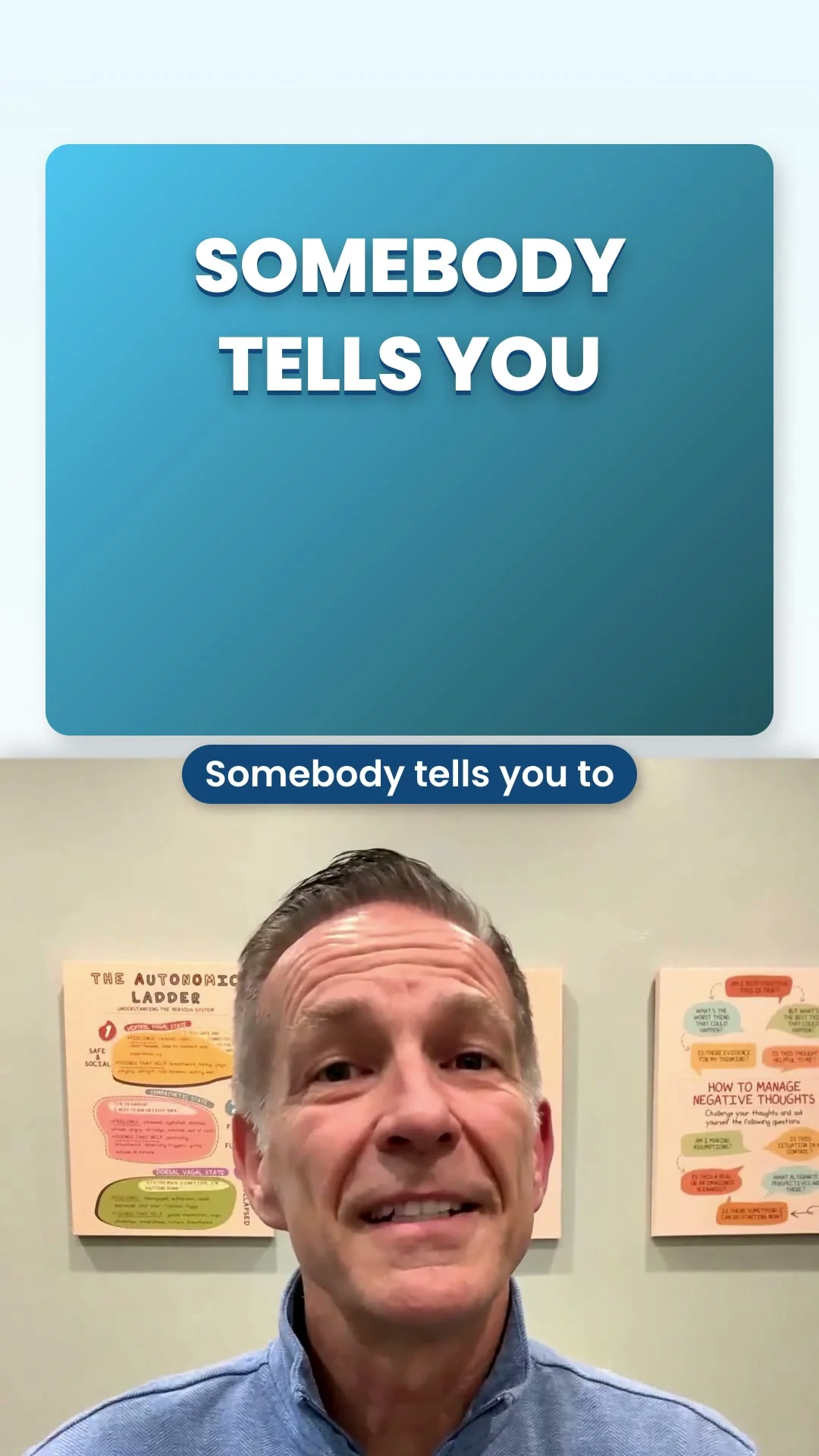
This is the exact technique in the video:
Breathe in through your nose for a count of 4.
Breathe out slowly for a count of 8 — twice as long as the inhale.
Repeat for 5 or 6 rounds.
That’s it. No app, no special posture, no incense. The exhale is doing the work, so don’t rush it — if 8 counts feels like a stretch at first, even in for 4 and out for 6 still extends the exhale enough to matter. The count matters less than the ratio: out longer than in.
Many clients tell us this is the first tool they reach for when they notice themselves getting wound up, precisely because it doesn’t require anything except a few seconds and a decision to use it.

A practical note
Breathing Helps. It’s Not a Replacement for Support.
A slower exhale is a genuinely useful, well-supported tool for calming an activated nervous system in the moment. It’s not a cure-all, and individual experiences vary. If you’re dealing with anxiety, panic, or stress that doesn’t ease up with tools like this, that’s worth bringing to a professional — whether that’s your doctor, a therapist, or looking into something like microcurrent neurofeedback, which is what we do here at Clear Mind Utah. Many clients come to us already using breathing techniques like this one and looking for additional support underneath it.
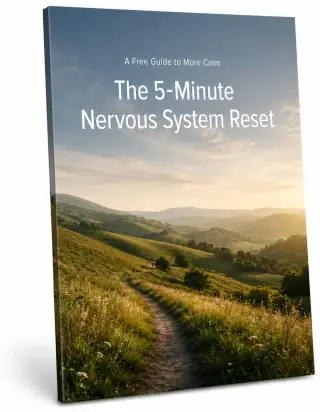
This Breathing Pattern Is Tool #1 in Our Free Guide
Grab the free 5-Minute Nervous System Reset guide for four more simple resets like this one.
Grab the Free Guide →Questions
Frequently Asked Questions
Where to go from here
Who This Helps, and What to Explore Next
This one’s for anyone who’s been told to “just breathe” and wanted to ask “which part of breathing, exactly?” — if a five-second physical reset sounds more useful than another reminder to relax, start here.

About the Author
Troy Gundersen
Troy is the co-founder and owner of Clear Mind Utah, a family-owned microcurrent neurofeedback center in American Fork, Utah. He and his wife Valerie opened the center after experiencing firsthand how a stuck nervous system can quietly take over, and how much is possible when it finally shifts. Troy works alongside Val and their daughter Sydni to help adults and families across Utah County find their way back to calm. Learn more about the team →
Clear Mind Utah · 21 E. 100 N., Ste. 101, American Fork, Utah · (385) 304-4434
Individual experiences vary. This technique is offered as general self-care information and is not a substitute for medical or mental health treatment. Clear Mind Utah provides microcurrent neurofeedback as a wellness and nervous system support service. We do not diagnose, treat, or cure any medical or mental health condition. If you are experiencing a mental health crisis, please contact a qualified professional or call or text 988 to reach the Suicide and Crisis Lifeline.