Neurofeedback Near Salt Lake City
Neurofeedback for Salt Lake City Families, Without the Drive You'd Expect
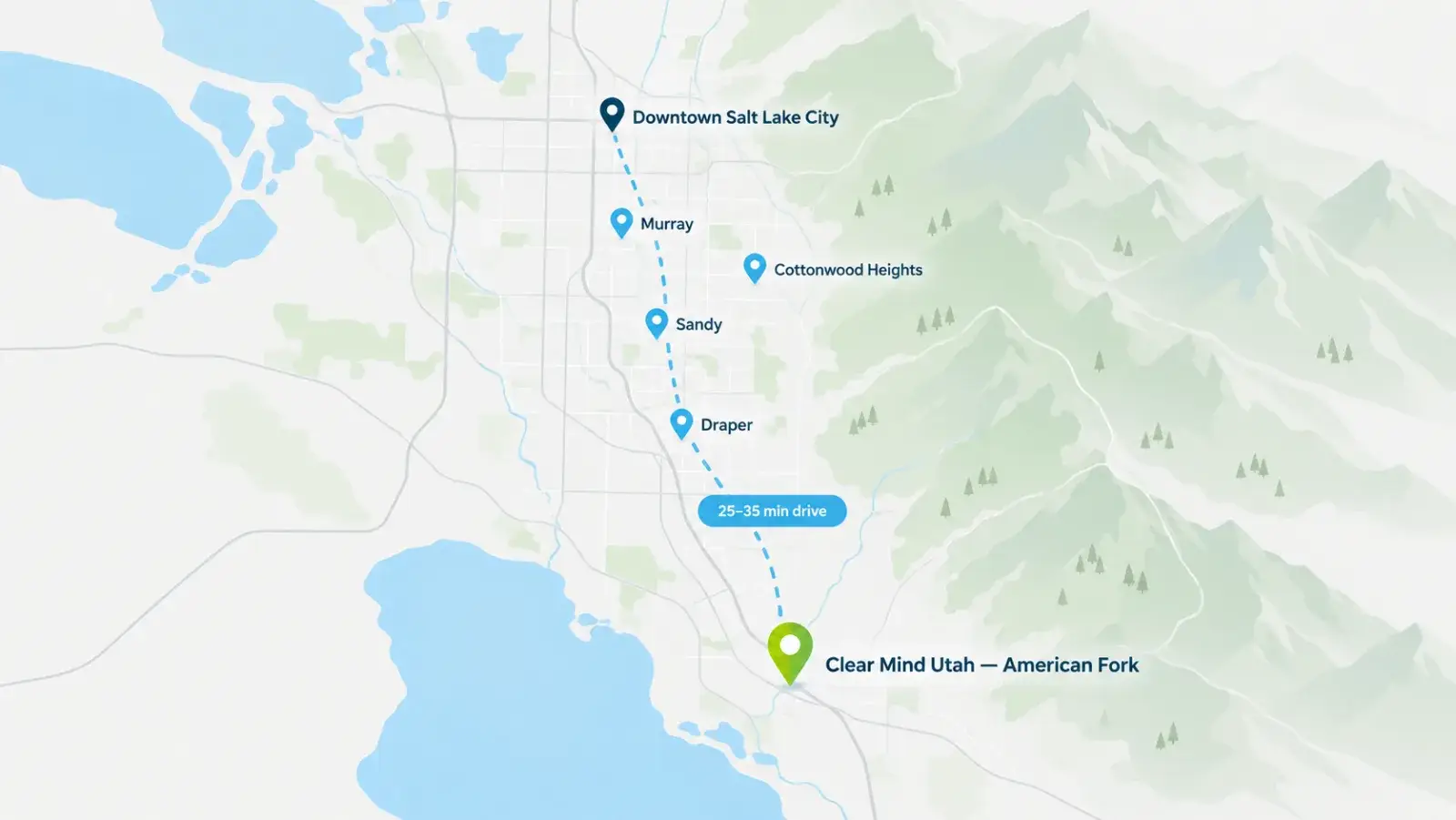
We're based in American Fork, and families come to us from all over the Salt Lake Valley — Sandy, Draper, Murray, Cottonwood Heights, and plenty of spots in between. Closer than most people expect, and worth the short drive for a lot of our Salt Lake City clients.
We use microcurrent neurofeedback to support a nervous system that's stuck in overdrive — no screens, no active task, nothing to force.
Serving Salt Lake City, Salt Lake County, and Utah County · American Fork, Utah
The basics
What Is Microcurrent Neurofeedback?
IASIS Microcurrent Neurofeedback is a gentle, passive approach aimed at supporting your nervous system's own ability to self-regulate. Small sensors rest on your scalp, paired with a gentle, FDA-registered microcurrent device, while you simply relax in a chair — no screens, no active concentration, nothing you have to do.
How it's different from traditional neurofeedback
Most people picture the other kind of neurofeedback when they hear the word — an EEG cap, a screen, and a video or game that only plays smoothly when your brain produces certain patterns. That's called operant-conditioning neurofeedback, and it works through repetition: your brain gets rewarded for hitting target patterns, session after session, gradually learning new patterns through active practice.
Microcurrent neurofeedback works differently. Instead of asking your brain to actively chase a reward on a screen, it pairs a gentle microcurrent with your brain's own electrical activity while you simply relax — no task, no screen, no effort required on your part.
What that can mean for your time
Sessions themselves tend to run shorter — commonly 20-30 minutes for microcurrent neurofeedback, compared to the 30-60 minutes of active screen engagement a typical operant-conditioning session calls for.
Because we understand how both approaches work, we chose to build our practice specifically around microcurrent neurofeedback — many clients notice a self-regulating shift in meaningfully fewer total sessions than what's commonly reported for traditional operant-conditioning neurofeedback, often cited in the range of two to three times fewer sessions. That's not a guarantee and not a controlled clinical comparison — individual experiences vary quite a bit — but it's a real part of why we chose this specific approach over the more common alternative. It's non-invasive and drug-free either way, and many clients use it alongside therapy, medication, or nothing else at all.
Common reasons people look into it
What People in the Salt Lake Area Explore Neurofeedback For
Anxiety
A nervous system that feels stuck in overdrive, often explored alongside talk therapy.
Learn more →ADHD / Focus
Concerns around distractibility and staying on task, including for kids and teens.
Learn more →And More
If something else is on your mind, ask us — most nervous system concerns fit somewhere on this list.
Closer than you'd think
Serving Salt Lake City and the Whole Valley
Our center is in American Fork, about 25-35 minutes from most of the Salt Lake Valley depending on traffic — closer than a lot of people assume before they check. We regularly see clients from Sandy, Draper, Murray, Cottonwood Heights, West Jordan, South Jordan, Holladay, Millcreek, and downtown Salt Lake City itself.
Plenty of families decide it's worth a longer trip, too — we've had clients travel from as far as Syracuse, Ephraim, and St. George. A drive from Salt Lake City tends to feel a lot shorter by comparison.
We offer flexible scheduling, including evenings and Saturdays, to make that drive worth it for families coming from Salt Lake County or other areas across the state.
What to expect
What a Session Actually Looks Like
Why not give your brain a bubble bath?
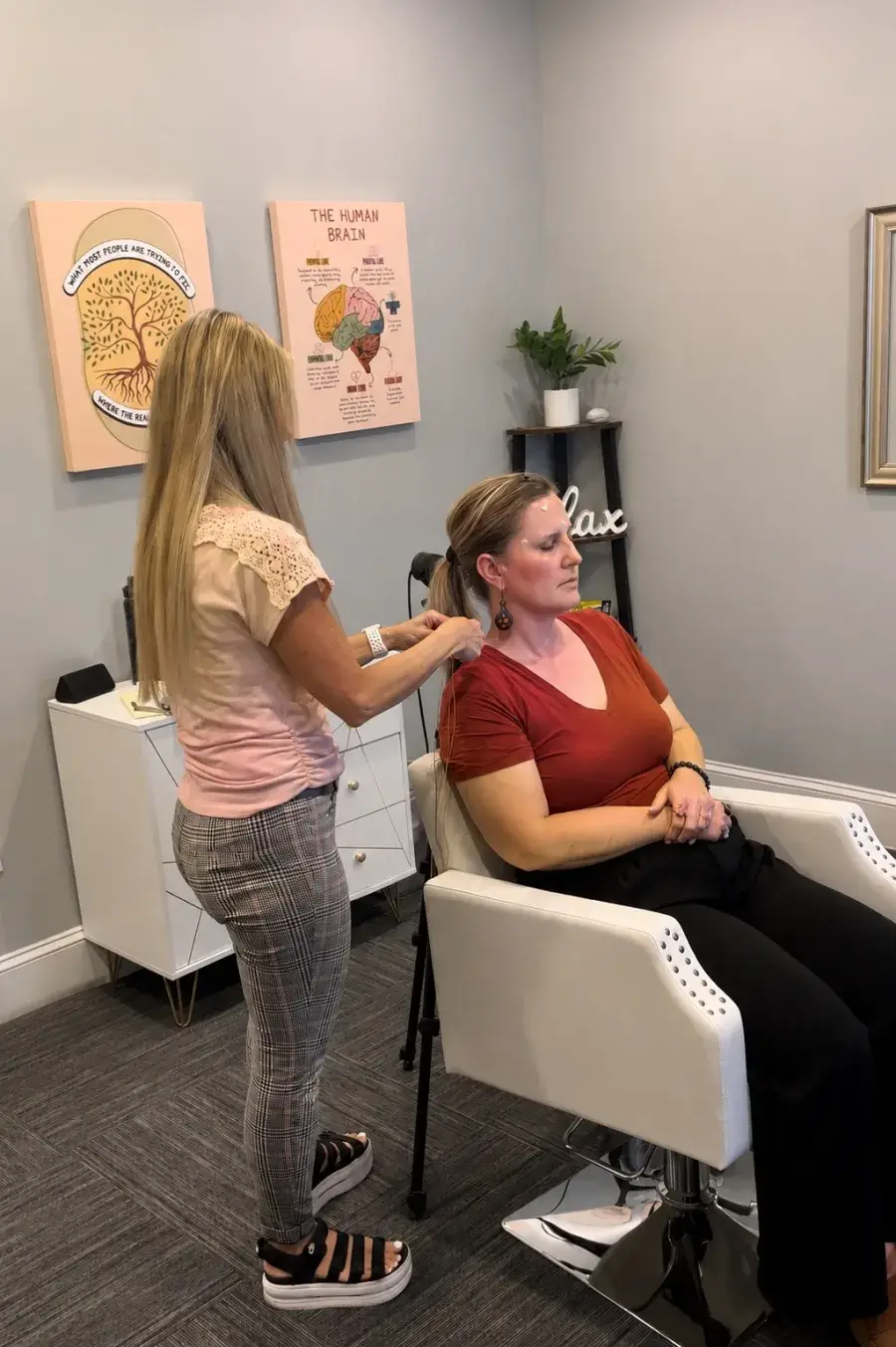
Sessions are relaxing, passive, and non-invasive. Small sensors are placed gently on your scalp while you sit comfortably for about 20-30 minutes. The microcurrent is so subtle most people don't feel anything at all — no screens, no active task, nothing to push through.
Many clients describe it as one of the few times their mind actually gets a chance to slow down.
Common questions
Frequently Asked Questions
Free 30-minute consultation
Worth the Drive From Salt Lake City?
A free consultation is a low-pressure way to find out — no referral needed, and we'll tell you honestly whether it makes sense for you before you commit to anything.
Or don't take our word for it — read what other families have to say before deciding if the drive is worth it.
No pressure. No referral needed. Flexible scheduling including evenings and Saturdays.
Clear Mind Utah · 21 E. 100 N., Ste. 101, American Fork, Utah · (385) 304-4434
Individual experiences vary. This technique is offered as general self-care information and is not a substitute for medical or mental health treatment. Clear Mind Utah provides microcurrent neurofeedback as a wellness and nervous system support service. We do not diagnose, treat, or cure any medical or mental health condition. If you are experiencing a mental health crisis, please contact a qualified professional or call or text 988 to reach the Suicide and Crisis Lifeline.

About the Author
Troy Gundersen
Troy is the co-founder and owner of Clear Mind Utah, a family-owned microcurrent neurofeedback center in American Fork, Utah. He and his wife Valerie opened the center after experiencing firsthand how a stuck nervous system can quietly take over, and how much is possible when it finally shifts. Troy works alongside Val and their daughter Sydni to help adults and families across Utah County find their way back to calm. Learn more about the team →