
Does your mind ever just... not stop?
Anxiety, low mood, ADHD, insomnia — they all tend to feed each other. A racing mind wrecks sleep, bad sleep wrecks focus, and the whole cycle just keeps circling. Medication can dial down symptoms for some people, but it's not the only path, and it's not the right fit for everyone. Microcurrent neurofeedback is a different approach — one aimed at supporting the nervous system directly, without pills.
What microcurrent neurofeedback actually is
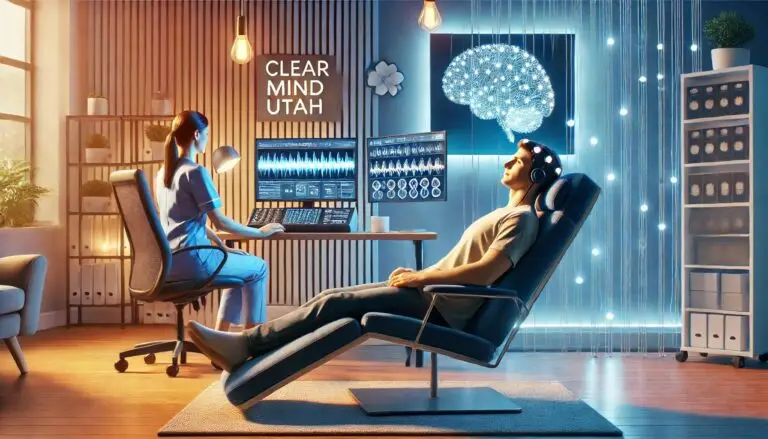
Microcurrent neurofeedback uses extremely low-level electrical stimulation to gently encourage the brain toward more balanced patterns. Unlike traditional neurofeedback, where you actively watch a screen or respond to cues, this version is passive — you sit back and relax while the session happens. That makes it workable even for younger clients or anyone who'd struggle to sit through an active, attention-heavy therapy.
- Low-level stimulation: the microcurrents are subtle enough that most people don't feel anything during a session.
- No physical sensation: no tingling, no discomfort — it's designed to be easy to sit through.
- Some people notice a shift early: some clients report a difference in mood or clarity within their first few sessions. Everyone's different, and how quickly (or whether) someone notices a change varies a lot person to person.
How this can factor into anxiety, low mood, ADHD, and sleep
Microcurrent neurofeedback isn't aimed at any one specific condition — it works with the whole brain's regulation rather than targeting one single condition. That said, here's how it tends to come up for each of these:
Anxiety
Anxiety often runs alongside an overactive "fight or flight" response — the sympathetic nervous system staying switched on longer than it needs to. Supporting the brain's own regulation can, for some people, help take the edge off that constant alert state over time.
Low mood
Low mood is connected to a lot of things — brain chemistry, sleep, stress load, and more. Neurofeedback doesn't replace whatever else is part of someone's care; it's a complementary piece some people add alongside it, aimed at supporting the brain's own capacity to regulate itself.
ADHD
Focus, organization, and impulse control are hard enough without a brain that won't settle. Because this therapy is passive, it's often a more workable option for kids (or adults) who find it difficult to sit through an active, task-based approach.
Sleep
Chronic sleep trouble is often tangled up with stress and a nervous system that's stuck "on." Supporting the body's ability to downshift can be part of building better sleep patterns over time, alongside whatever else someone's already doing for their sleep.
What makes this approach different
- Passive: no active participation required — just sit and relax.
- Non-invasive and drug-free: no needles, no medication, no dependency to manage.
- A shorter time commitment than some other approaches, which matters if your schedule's already packed.
Individual experiences vary quite a bit here — some people notice changes sooner, some later, some more subtly than others. This isn't a guaranteed fix, and it's not positioned to replace medical care; it's one more tool some people find useful as part of a broader approach to supporting their nervous system.

Who tends to look into this in Utah
People searching for a non-medication option for anxiety, low mood, ADHD, or sleep trouble are often the ones who end up looking into microcurrent neurofeedback — usually because they've either tried medication and didn't love the side effects, or they just want to try something else first.
What a session at Clear Mind Utah actually looks like
Our practitioners walk you through the whole process before you start, answer whatever questions you've got, and tailor sessions to what you're actually dealing with. The sessions themselves are painless and passive — you relax while the low-level microcurrent stimulation happens in the background. Because it's gentle and non-invasive, it works for a wide range of ages and backgrounds.
Curious if this is a fit for you?
If you're dealing with anxiety, low mood, ADHD, or sleep trouble and you're looking for a non-medication option to explore, a free 30-minute consultation is a low-pressure way to find out more.
Book FREE 30-Minute ConsultationClear Mind Utah · 21 E. 100 N., Ste. 101, American Fork, Utah · (385) 304-4434
Individual experiences vary. This technique is offered as general self-care information and is not a substitute for medical or mental health treatment. Clear Mind Utah provides microcurrent neurofeedback as a wellness and nervous system support service. We do not diagnose, treat, or cure any medical or mental health condition. If you are experiencing a mental health crisis, please contact a qualified professional or call or text 988 to reach the Suicide and Crisis Lifeline.

About the Author
Troy Gundersen
Troy is the co-founder and owner of Clear Mind Utah, a family-owned microcurrent neurofeedback center in American Fork, Utah. He and his wife Valerie opened the center after experiencing firsthand how a stuck nervous system can quietly take over, and how much is possible when it finally shifts. Troy works alongside Val and their daughter Sydni to help adults and families across Utah County find their way back to calm. Learn more about the team →