
Are you one of the millions dealing with anxiety — the constant worry, racing thoughts, and unease that creep into everything? If so, you're not alone. Anxiety has a way of taking over, making it hard to just function some days, let alone enjoy things.
Medication helps a lot of people, but it's not the only option, and it doesn't work the same way for everyone. If you're looking for something to explore alongside or instead of medication, microcurrent neurofeedback is worth understanding.
Microcurrent neurofeedback (MCN) is a non-invasive approach that works with the brain's own regulation rather than targeting anxiety directly as a specific condition. Some people dealing with anxiety, low mood, PTSD, insomnia, or irritability have found it a useful piece of their approach to feeling more balanced. Here's how it works.

What Is Microcurrent Neurofeedback (MCN)?
Microcurrent Neurofeedback is a drug-free approach that works by delivering gentle electrical impulses to the brain. The idea is to support the brain's own ability to settle out of "stuck" patterns and back toward more balanced functioning.
MCN is part of the broader neurofeedback family, which has been studied for decades in relation to a range of neurological and psychological concerns. What sets MCN apart is its use of very low-level microcurrent stimulation rather than the active, screen-based feedback used in traditional neurofeedback.
MCN and Brain Health
It's worth being upfront: MCN isn't aimed at any one specific condition. Instead, it focuses on supporting the brain's overall regulation. Some people dealing with anxiety, PTSD, low mood, insomnia, and other concerns report improvements in how they're feeling, though individual experiences vary a lot.

How Does This Relate to Anxiety?
Anxiety is often connected to brainwave patterns that get "stuck" in a high-alert state — the kind that makes it hard to feel calm even when nothing's actively wrong. Microcurrent neurofeedback works by gently supporting the brain as it shifts out of these patterns, sending subtle electrical signals that encourage recalibration. Some people say they notice feeling calmer, more focused, or more in control of their thoughts over time.
What People Commonly Mention
Here's some of what people report when they try MCN for anxiety-related concerns — individual experiences vary quite a bit:
1. Non-Invasive and Drug-Free
One thing people appreciate about MCN is that it's entirely non-invasive and drug-free — no medication side effects to manage, no chemistry being altered. It's a more natural option for people who want to try something besides medication.
2. A Different Angle Than Symptom Management
A lot of anxiety approaches focus on managing symptoms directly. MCN instead works with the brain's overall regulation — some people find that supporting the underlying patterns helps with the frequency and intensity of what they're feeling over time.
3. Some Notice Something Early, Some Later
Some people mention noticing a sense of calm or clarity after just a few sessions. For others it takes longer, and for some people it's subtle. Individual experience varies a lot here, and there's no guarantee either way.
4. Sleep
Anxiety and sleep trouble often go hand in hand. Some people who try MCN report better sleep quality alongside whatever else they notice.
5. PTSD and Low Mood
Because these often involve similar patterns of brainwave dysregulation, some people dealing with PTSD or low mood alongside anxiety report finding it a useful piece of their approach too.
6. Focus
Anxiety doesn't just affect mood — it can make it hard to think clearly too. Some clients mention better focus and mental clarity alongside other changes.

MCN and Other Concerns
While this article's focused on anxiety, MCN's approach — supporting overall brain regulation rather than targeting one condition — comes up for a range of other things too, including low mood, PTSD, insomnia, and irritability. Since it works with the whole brain rather than one specific symptom, it's not unusual for people dealing with more than one of these at once to look into it.
What Does a Session Feel Like?
If the idea of electrical currents sounds intimidating, most people describe MCN sessions as gentle and painless — often just a sense of relaxation, sometimes feeling refreshed afterward.
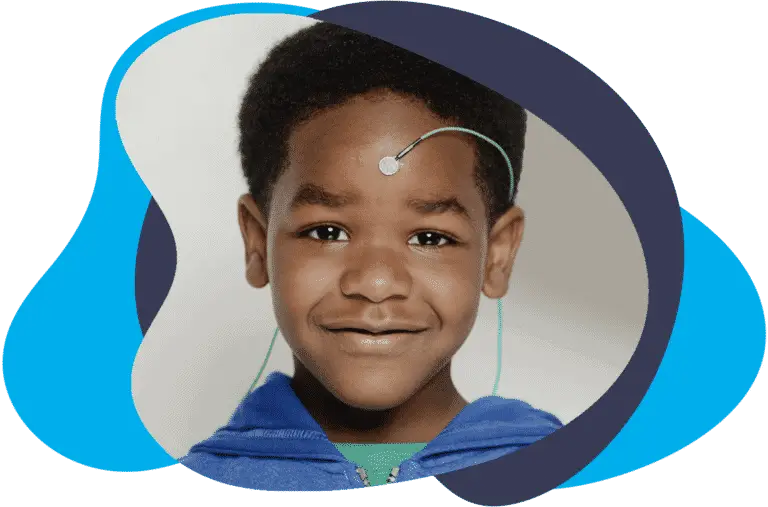
A typical session runs about 30-45 minutes. Small sensors go on the scalp to monitor brain activity while the device delivers very low-level microcurrent stimulation. Sessions happen in a quiet, comfortable setting.
Who Tends to Look Into This
People who often end up exploring MCN include:
- People dealing with anxiety who want to try a non-medication option
- People struggling with insomnia or sleep trouble
- People living with PTSD or a trauma history
- People dealing with low mood who want to explore options alongside their existing care
- People looking for a natural, drug-free approach to support their mental wellness
- People who feel like they're lacking focus or motivation
What People Report Afterward
Some people notice something after their very first session — feeling a bit calmer or more grounded. For others, changes build more gradually over several sessions as the brain has more chances to practice a steadier pattern. There's no set timeline, and it's different for everyone.
Commonly mentioned things include better sleep, improved mood, less irritability, and a general sense of feeling more like themselves.

Curious If This Could Help?
Microcurrent neurofeedback is a non-invasive option some people find useful when they're looking for something outside of medication to support their nervous system. It's not aimed at any one specific condition — it works with the brain as a whole. If you're curious whether this could be a fit for anxiety or something else you're dealing with, a free consultation with Clear Mind Utah is a low-pressure way to find out more. Call or text us at 385-304-4434.
FAQs
What is Microcurrent Neurofeedback?
Microcurrent Neurofeedback (MCN) is a non-invasive approach that uses gentle electrical impulses to support brain activity and overall regulation.Does MCN get rid of anxiety?
MCN isn't aimed at any one specific condition — it works with the brain's overall functioning. Some people who try it report their anxiety symptoms feel more manageable, but individual experiences vary and there's no guaranteed outcome.Is Microcurrent Neurofeedback safe?
It's generally considered safe, painless, and drug-free, which is part of why some people look into it as a natural option.How many sessions of MCN are usually needed?
It varies quite a bit by person — some people mention noticing something within 5-10 sessions, but there's no fixed number that applies to everyone.Can MCN come up for other concerns besides anxiety?
Yes — people dealing with low mood, PTSD, insomnia, irritability, and other concerns sometimes look into it too, since it works with overall brain regulation rather than one specific symptom.Can it help with sleep too?
Some people mention it does. See our other article, Reclaim Your Deep Sleep with Neurofeedback.
Clear Mind Utah · 21 E. 100 N., Ste. 101, American Fork, Utah · (385) 304-4434
Individual experiences vary. This technique is offered as general self-care information and is not a substitute for medical or mental health treatment. Clear Mind Utah provides microcurrent neurofeedback as a wellness and nervous system support service. We do not diagnose, treat, or cure any medical or mental health condition. If you are experiencing a mental health crisis, please contact a qualified professional or call or text 988 to reach the Suicide and Crisis Lifeline.

About the Author
Troy Gundersen
Troy is the co-founder and owner of Clear Mind Utah, a family-owned microcurrent neurofeedback center in American Fork, Utah. He and his wife Valerie opened the center after experiencing firsthand how a stuck nervous system can quietly take over, and how much is possible when it finally shifts. Troy works alongside Val and their daughter Sydni to help adults and families across Utah County find their way back to calm. Learn more about the team →