
If you're a Utah County parent lying awake wondering whether medication is really the only path forward for your child's ADHD, you're not alone — and you're not wrong to ask the question.
Every week, we talk with parents in American Fork, Lehi, Pleasant Grove, and across Utah County who are exhausted from a different kind of homework: researching side effects, tracking mood changes, calling the pediatrician again, and wondering if there's a piece of the puzzle nobody's mentioned yet.
This isn't an article telling you medication is wrong for your family. For many kids, it helps enormously. But if you've landed here, it's probably because something about the current plan isn't sitting right — maybe the side effects feel like a trade-off you didn't sign up for, maybe it's not working the way it used to, or maybe you just want to understand what else is out there before you decide. So let's talk about what Utah County parents are actually trying, and why.
Why So Many Parents Are Looking for Something More
ADHD doesn't look the same in every kid. For some, it's the inability to sit through dinner. For others, it's the meltdown after a totally normal school day, or the straight-A student who can't fall asleep before midnight no matter how tired they seem. Parents often tell us they feel like they're managing symptoms one at a time without ever getting underneath what's actually going on.
A lot of what looks like "ADHD behavior" — the fidgeting, the emotional swings, the trouble focusing — is connected to how a child's nervous system is regulating itself. When a nervous system is stuck in a heightened or unsettled state, focus, impulse control, and emotional steadiness all become harder to access, even when a child is trying their hardest.
That's the piece a lot of parents haven't heard about — and it's why so many are exploring approaches that support the nervous system directly, rather than only managing behavior from the outside.
What Utah County Parents Are Actually Trying
In our conversations with local families, a few approaches come up again and again:
Structured routines and sleep support. Consistent wake times, wind-down routines, and screen boundaries — simple, but many parents notice a real shift once sleep stabilizes.
Diet and movement changes. Reducing processed sugar, adding protein at breakfast, and daily outdoor movement are common starting points, especially for younger kids.
Occupational therapy and behavioral coaching. Especially helpful for building specific skills like organization and emotional labeling.
Nervous system-based approaches, like neurofeedback. A growing number of Utah County families are exploring this as a way to support focus and emotional regulation without relying solely on medication.
We specialize in that last one. At Clear Mind Utah, we work with a specific, non-invasive approach that sends a gentle signal to help the brain and nervous system settle into steadier patterns. Parents often describe it less like "fixing" their child and more like giving their child's brain the support it needs to access the focus and calm that's already in there.
What This Looks Like in Practice
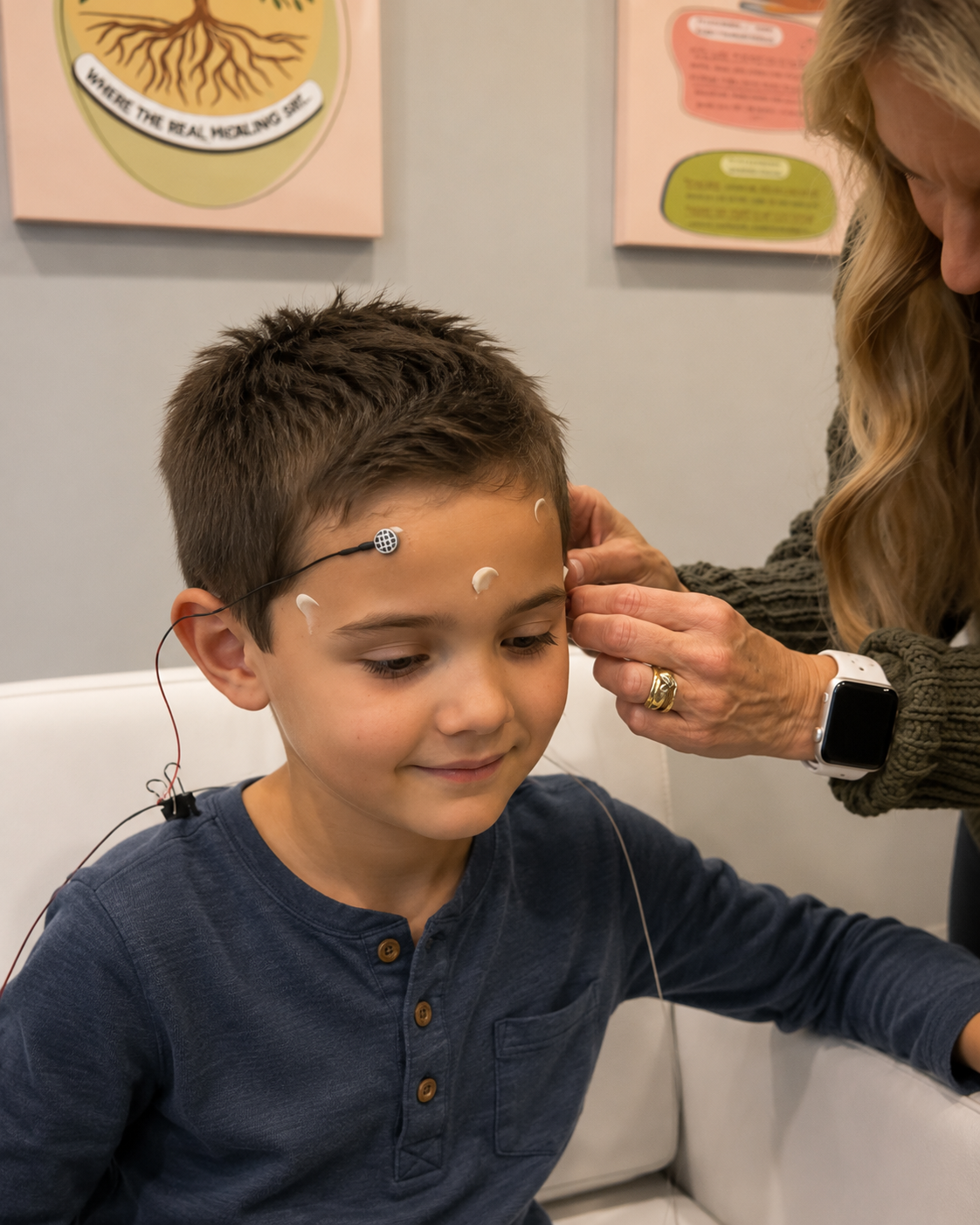
Sessions are quiet and low-pressure — kids often watch a show or relax while small sensors are placed on the scalp. There are no wires delivering anything into the body, no medication, and nothing invasive. Many parents tell us their child looks forward to the appointment rather than dreading it, which is often a relief in itself.
Because every child's nervous system is different, we don't promise a specific outcome before we've actually gotten to know your child. What we can tell you is what other Utah County parents have shared with us — that after a series of sessions, many notice their child seems calmer at the dinner table, settles into homework a little easier, or has fewer blowups over small things. Individual experiences vary, and we're always upfront about that.
"We tried everything before this. I'm not saying it was magic, but my son is a different kid at the dinner table than he was six months ago." — Clear Mind Utah client, American Fork
You Don't Have to Choose Between "Medication" and "Nothing"
One of the most common things we hear from parents is relief that there's a middle path — something they can try alongside what they're already doing, or explore before deciding on medication at all. This isn't about replacing your pediatrician's advice. It's about giving your family more information and more options before you decide what's right for your child.
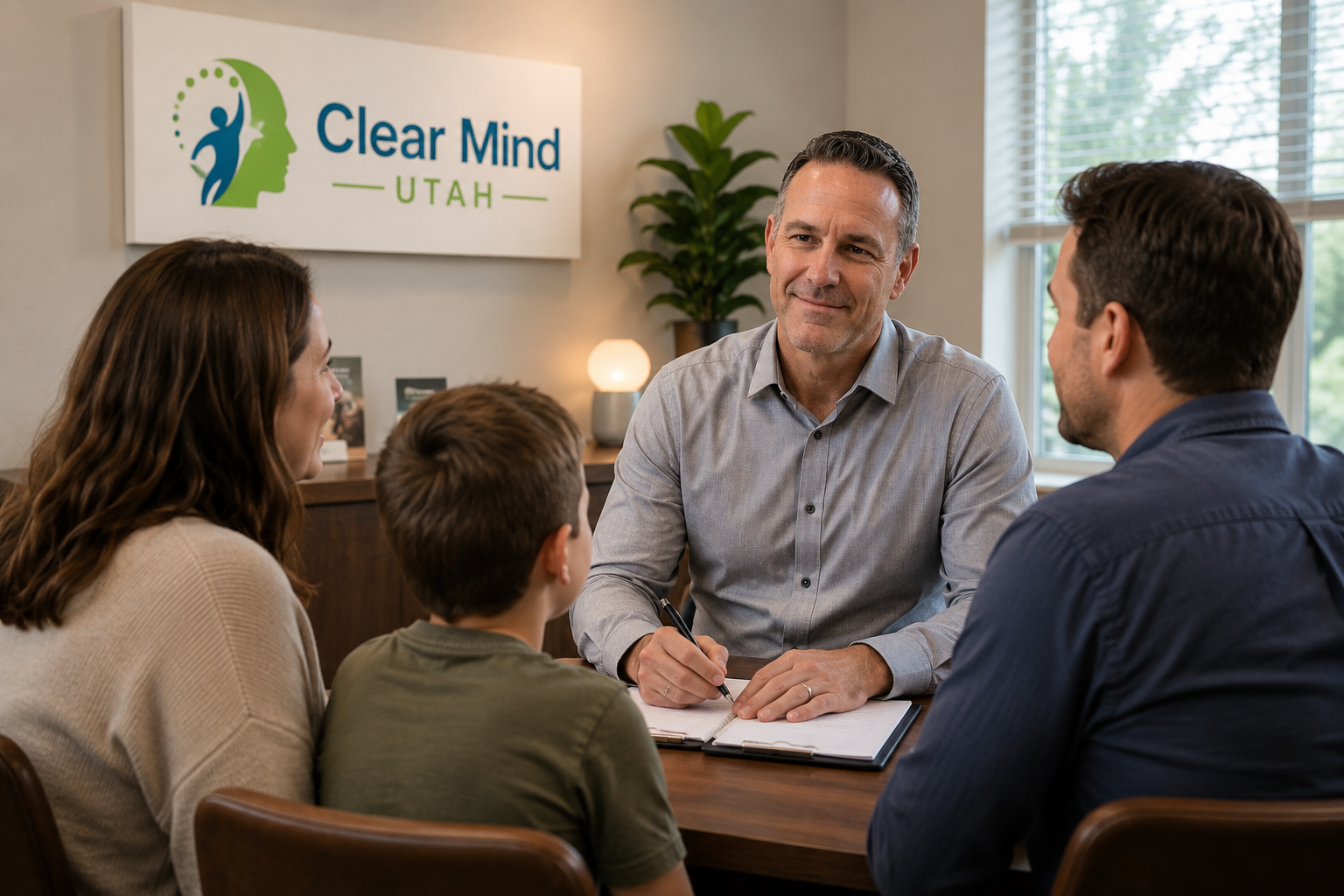
Curious whether this could be a fit for your child?
We offer a free consultation so you can ask questions and see if it makes sense for your family — no pressure, no obligation.
Book a Free ConsultationWant to learn more first? Visit our ADHD support page for a closer look at what sessions involve, curious how many sessions it actually takes? Here's what to expect, or head to our Learning Center to hear directly from other parents about their experience.
Clear Mind Utah does not diagnose, treat, or cure any medical condition. Individual experiences and results vary. This content is for educational purposes and is not a substitute for advice from your child's physician.