
If you've ever laid awake asking yourself why can't I relax even though nothing is actually wrong, you're not alone — and it's not a mindset problem.
This is one of the most common things we hear at Clear Mind Utah: "I know I should feel fine. I just can't seem to get there." People describe it in different ways — a low hum of worry that never quite turns off, a body that feels tense even during a good day, a mind that goes straight to worst-case scenarios before bed. Some people have been living this way for so long they've started to assume it's just who they are.
It's not. Here's what's actually going on.
Your Nervous System Has Two Modes
Think of your nervous system as having two basic settings.
The first is what most people know as "fight or flight" — your body's emergency response system. When you sense danger, your heart rate goes up, your muscles tighten, your brain sharpens its focus on the threat. This system is incredibly good at keeping you safe. It's fast, automatic, and powerful.
The second setting is sometimes called "rest and digest" — the calm, settled state where your body recovers, repairs, and actually gets to rest. Heart rate slows. Muscles release. Your brain can think clearly and creatively instead of scanning for threats.
A healthy nervous system moves fluidly between these two states. Stress goes up when needed, comes back down when the threat passes. That's the full cycle working as designed.

What Happens When the "Coming Down" Part Stops Working
Here's the part nobody talks enough about.
For a lot of people — especially people who've been through sustained stress, difficult seasons, or accumulated pressure over years — the nervous system gets stuck in that first setting. Not because a threat is present right now, but because it learned, over time, that staying braced was safer than coming down.
Stress builds. The nervous system goes up. And then it doesn't quite come all the way back to baseline before the next thing hits. And the next thing. And the next.
Eventually the baseline itself shifts upward. What used to feel like high alert starts feeling normal. And the body forgets what calm actually feels like.
This is what we often call nervous system dysregulation — and it's not a character flaw, a weakness, or a mindset problem. It's a system that has adapted to what it experienced. Brilliantly, actually. It just adapted in a direction that's no longer serving you.
"You were not failing at calm. Your nervous system was stuck. Those are completely different things — and confusing them has cost a lot of people a lot of years."
— Troy Gundersen, Clear Mind Utah
What This Looks Like in Real Life
Nervous system dysregulation shows up differently for different people. Some of the most common patterns we see at Clear Mind Utah:
- Racing thoughts at night — your body is exhausted but your brain won't power down
- Anxiety without a clear cause — a low hum of dread or worry that doesn't attach to any specific thing
- Snapping at people you love — short fuse, low patience, feeling guilty about it afterward
- Feeling flat or disconnected — going through the motions without really feeling present
- Physical tension — tight shoulders, jaw clenching, headaches, a body that never quite lets go
- Exhausted but wired — running on empty all day, then wide awake at 2am
If several of those feel familiar, you're not alone — and you're not broken. That combination of symptoms is one of the clearest signs that a nervous system has been running in high gear for too long without a real chance to come back down.
Why "Just Relax" Doesn't Work
Here's the thing about a nervous system that's stuck in fight-or-flight mode: it doesn't respond to logic.
You can know, intellectually, that everything is fine. You can remind yourself to breathe. You can list the things you're grateful for. You can tell yourself to calm down. And the alarm keeps going anyway — because the alarm isn't a thought. It lives below the level of thought, in the parts of your brain that process safety and threat before your conscious mind even gets involved.
Telling an overactive nervous system to relax is a bit like yelling at a smoke alarm to stop beeping without checking for a fire. The alarm isn't broken. It's doing exactly what it was designed to do. It just needs a different kind of signal — one that says, directly to the system itself: you're safe now. You can come down.

What May Help: Working With the Nervous System Directly
Most approaches to anxiety work from the top down — trying to change thoughts, behaviors, or habits in hopes that the nervous system follows. And those approaches have real value. Therapy, mindfulness, exercise, better sleep — none of these are wrong.
But for people whose nervous system has been stuck for a long time, or who've already tried the conventional approaches without finding lasting relief, there's another direction worth understanding: working with the nervous system directly, at the level where the dysregulation actually lives.
At Clear Mind Utah, we use IASIS Microcurrent Neurofeedback — a gentle, non-invasive approach that delivers a very low-level signal to the brain. The signal is subtle enough that most people don't feel anything during a session. There's no effort required, no concentration, nothing to practice or push through. You simply sit back while the system works.
Many clients tell us they notice a shift within the first few sessions — a quieter baseline, less reactivity, an easier time winding down at night. Others experience more gradual changes over a series of sessions. Everyone responds a little differently, and individual experiences and results vary.
What we hear most often is some version of: "I didn't realize how tense I'd been until I wasn't anymore."
Want to learn more about how IASIS Microcurrent Neurofeedback supports the nervous system?
We've put together a dedicated page on anxiety support that goes deeper into what to expect, who this tends to help, and what our clients at Clear Mind Utah in American Fork have experienced.
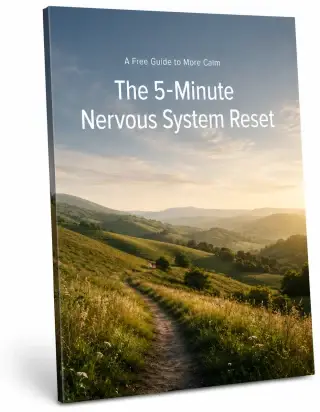
Read: Neurofeedback for Anxiety in Utah County →Free Your Mind — A 7-Day Email Course
Short, simple emails on why your nervous system gets stuck — and small ways to help it find its way back to calm. Free, no strings attached.
Start the Free Course →You Don't Have to Have It All Figured Out Before You Reach Out
A lot of people who eventually find their way to Clear Mind Utah tell us they waited longer than they needed to because they weren't sure if what they were experiencing was "bad enough" to warrant help. They kept hoping it would get better on its own. They tried a few things. They got busy. They managed.
If that sounds familiar — you don't need a diagnosis, a referral, or a clear explanation of what's wrong to have a conversation with us. We offer a free 30-minute consultation where we listen to what you're dealing with and help you figure out if this might be a good fit for you or your family.
No pressure. No obligation. Just a real conversation.
Free 30-minute consultation
Ready to Talk?
Clear Mind Utah is a family-owned neurofeedback center in American Fork, serving families across Utah County and Southern Salt Lake County. Call, text, or book online — no referral needed.
Clear Mind Utah · 21 E. 100 N., American Fork, Utah · (385) 304-4434
Mon–Thu 10am–9pm · Fri 10am–5pm · Sat 10am–4pm · By appointment only
Related Reading